


Bone Strength Exercises: What the Research Actually Says
If you’ve been told your bone density is low — or you’re simply wondering what you can do to protect your bones as you age — you’ve probably been given some version of the same advice: “be careful,” “avoid falls,” “take calcium.”
What you might not have been told is what exercise to do, and why.
This article covers what the evidence actually says about bone strength exercises, why the commonly recommended approach often isn’t enough, and what a properly structured bone health program looks like.
What happens to bone density as we age?
Bone is living tissue. It’s constantly being broken down and rebuilt in a process called bone remodelling. In younger years, bone formation outpaces breakdown — meaning bone density increases through to around age 30.
After that, the balance begins to shift. Bone breakdown gradually outpaces formation, leading to a slow but steady decline in bone density over time.
This process accelerates significantly at menopause, when the drop in oestrogen removes one of the key hormonal signals that supports bone formation. Within the first five to ten years after menopause, women can lose up to 20% of their bone density.
Osteopenia (low bone density) and osteoporosis (significantly low bone density, with increased fracture risk) are the clinical labels for where this decline ends up. In Australia, roughly one in three women and one in five men over 50 will experience an osteoporotic fracture in their lifetime.
The problem with “be careful”
When someone receives a low bone density diagnosis, the most common advice they receive is passive: avoid falls, limit impact activities, take vitamin D and calcium.
These things aren’t wrong. But they’re not enough on their own — and in some cases, the “be careful” framing can actually backfire.
When people are told to be careful, they often become more sedentary. They stop activities they previously enjoyed. They walk less, lift less, do less. And reduced physical activity accelerates exactly the bone loss they’re trying to prevent.
The evidence is clear: the right kind of exercise doesn’t just slow bone density loss. It can reverse it.
What the LIFTMOR trial showed
The most significant study on exercise and bone density in women with osteoporosis is the LIFTMOR trial — a landmark Australian research project led by Professor Belinda Beck at Griffith University.
What the researchers found challenged the conventional approach to exercise in osteoporosis.
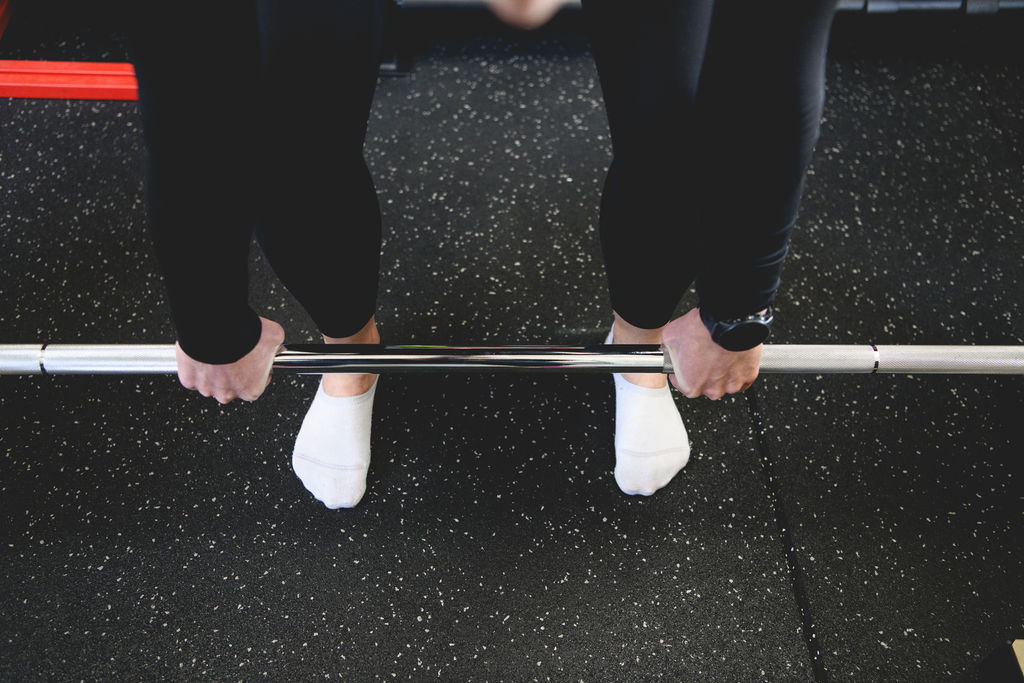
Women with low bone density (osteopenia and osteoporosis) were randomised to either a high-intensity progressive resistance and impact training program, or a low-intensity exercise program. The high-intensity group performed exercises including deadlifts, overhead presses, and impact loading exercises — the kind of exercise that would have seemed contraindicated for someone with weak bones.
The results: the high-intensity group showed significant improvements in bone density at the lumbar spine and femoral neck (the hip) — two of the most fracture-prone sites. The low-intensity group showed no significant change.
The study also showed improvements in muscle strength and balance — additional protective factors against falls and fractures.
The conclusion? High-intensity, progressive, supervised exercise is safe and effective for women with low bone density — and it outperforms gentle exercise for bone health outcomes.
Why “light exercise” often isn’t enough
The mechanism here is worth understanding. Bone responds to mechanical load — specifically, to stress that exceeds what the bone is used to. When you apply load to bone (through resistance training or impact), it triggers bone-forming cells (osteoblasts) to lay down new bone tissue.
Light, repetitive exercise — walking, gentle cycling, low-load movement — doesn’t create the kind of stress signal that stimulates bone formation. The load is too predictable and too low. The skeleton adapts quickly and stops responding.
To stimulate meaningful bone remodelling, the exercise needs to be:
- High load — close to what the bone can handle
- Progressive — increasing over time as the bone adapts
- Targeted — loading the specific areas at risk (spine, hip, wrist)
This doesn’t mean reckless or unsafe. It means structured, supervised, and appropriate to the individual’s starting point.
Is it safe?
This is the question almost everyone asks when we explain what the program involves.
The LIFTMOR trial addressed this directly. Despite involving high-intensity resistance training and impact exercise in women with osteoporosis — a population most clinicians would consider high-risk for this kind of loading — the study recorded no fractures, no serious adverse events, and no significant injuries in the supervised training group.
That finding matters, because the exercises involved are genuinely demanding. Deadlifts. Overhead pressing. Impact loading exercises. For someone who has been told their bones are fragile, the idea of lifting heavy feels counterintuitive at best.
But the key variables in the LIFTMOR trial were supervision and progression. Participants were coached by experienced exercise professionals. Load was increased incrementally, and technique was closely monitored throughout. Nobody was handed a heavy barbell on day one.
This is why the “supervised” part of the LIFTMOR prescription matters as much as the “high-load” part. When both are present, the risk profile changes substantially.
At Tanunda Physio & Health, our Bone Health Group operates the same way. Every session is supervised by a physiotherapist. Load is progressed individually — based on each person’s starting strength, confidence, and response to training. The goal is always to work at the appropriate challenge level, not the maximum possible load.
What does the Bone Health Group at Tanunda Physio & Health involve?
Our Bone Health Group is built directly from the LIFTMOR research. Every element of the program — the exercises, the loading approach, the progression model — is grounded in the same evidence base that produced those results.
Each session includes:
- Progressive resistance exercises targeting three fundamental movement patterns known to increase bone density and improve functional strength
- Impact loading exercises appropriate to each individual’s capacity — to stimulate bone remodelling at the hip
- Physiotherapist supervision throughout — technique is coached, load is monitored, and progression is managed individually
Sessions run in small groups of four to six people. That’s a deliberate choice. Bone health exercise has to be progressive — the load needs to increase as your strength builds. That can’t happen safely in a large class where everyone follows the same program. Small groups allow us to progress each person individually while still creating the dynamic of training alongside others.
Every participant starts with a one-on-one assessment. We review your DEXA results, assess your baseline strength and movement, discuss your history and goals, and design your starting program from there. You don’t walk into your first group session without us understanding who you are and where you’re starting from.
More than a program
Something we didn’t fully anticipate when we started the Bone Health Group was what would develop around the sessions themselves.
The small group structure creates something a one-on-one appointment doesn’t — a regular cohort of people working through the same challenge, showing up consistently, and getting to know each other along the way. Friendships have formed. Some of the group have made a habit of going for coffee together after almost every session — a routine that started on its own, without any prompting from us. That wasn’t something we designed. It emerged naturally.
You know when the Bone Health Group is on. The clinic is at its most vibrant — there’s chatter before the session starts, energy throughout, and laughter mixed in with the work. These are people who show up to work hard, and they do. But they do it with a smile, and with each other. It’s one of the genuinely great things about the clinic on those days.
The benefit of that is hard to quantify but very real. Consistency is the most important variable in any long-term exercise program. When you’re part of a group where you feel known — where people notice if you don’t show up, where the social connection is something you look forward to as much as the session itself — that changes your relationship with the program entirely.
For many of our members, the Bone Health Group has become a fixed, valued part of their week. Not just because their bones are stronger. Because they enjoy it.
Who is the program suitable for?
The Bone Health Group is designed for people who:
- Have received a DEXA scan showing osteopenia or osteoporosis
- Are post-menopausal, or over 50 and in a higher-risk group
- Have a family history of osteoporosis or a previous fracture
- Want a clear, evidence-based plan — not just general advice
- Are looking for a program they can commit to consistently, with professional support
If you’re unsure whether you’d be suitable, an initial assessment is the right starting point. We’ll go through your DEXA results, assess your baseline strength and movement, and give you an honest picture of where you’re at and what’s possible. There’s no obligation to join the group from there — but most people do.
The bottom line
If you’ve been told your bone density is low, you’ve probably been waiting for clarity on what to actually do about it.
The evidence is clear. “Be careful” doesn’t build stronger bones. Progressive, supervised, resistance-based exercise does — and it’s safe, even for people with osteoporosis, when it’s delivered properly.
The Bone Health Group at Tanunda Physio & Health was built to deliver exactly that. Evidence-based programming. Physiotherapist supervision. Individual progression from day one. A small group environment where people show up consistently, support each other, and — more often than not — end up at coffee together afterwards.
If you’ve been looking for a program you can trust, that’s built on evidence, delivered by people who genuinely understand bone health, and that you’ll actually look forward to — this is it.
Call us on (08) 7123 4174 or enquire via our website to book an initial assessment.
References: Beck BR et al. (2017). Exercise and Sports Science Australia (ESSA) position statement on exercise prescription for the prevention and management of osteoporosis. Journal of Science and Medicine in Sport. LIFTMOR trial, Griffith University.